

World Spine Day: Your Back Pain Isn't Something to Just Live With
Almost everyone deals with back or neck pain at some point — after a long drive, a bad night's sleep, or one too many hours hunched over a laptop. Most of the time it passes. But for a lot of people, it doesn't, and they end up adjusting their whole life around it instead of asking why it's happening.
World Spine Day, observed every year on 16 October, is a reminder that a healthy spine isn't optional. It's what lets you walk, bend, lift your kids, sit through a workday and sleep without waking up stiff. This year's focus is simple: take spine health as seriously as you take any other part of your health.
Why Your Spine Deserves More Attention
Your spine does more than hold you upright. It protects your spinal cord, carries the nerve signals that control movement and sensation throughout your body, and absorbs shock every time you walk, run or jump. When something along that chain goes wrong, the pain rarely stays in one place. A pinched nerve in your lower back can show up as pain shooting down your leg. A stiff neck can trigger headaches you'd never connect to your spine at all.
The good news: most spine problems are preventable, and the ones that aren't usually respond well to treatment when they're caught early.
Common Spine Problems People Live With
If any of these sound familiar, you're not alone — these are some of the most common reasons people search for a spine specialist near them:
- Chronic back pain that flares up with sitting, standing or certain movements
- Slip disc (slipped disc / herniated disc), where a disc presses on a nearby nerve
- Sciatica — pain that travels from the lower back down one leg
- Neck pain and stiffness, often linked to desk work and phone use
- Spondylosis, the wear and tear that comes with age
- Scoliosis, an abnormal sideways curve of the spine
- Spinal stenosis, narrowing of the space around the spinal cord and nerves
- Osteoporosis-related fractures, more common after 50, especially in women
What's Really Causing the Pain?
Spine problems rarely come from one single thing. More often, it's a mix of habits and factors that build up over time:
Everyday habits
- Sitting for long hours with poor posture
- Looking down at your phone for hours ("tech neck")
- Lifting heavy objects the wrong way
- Sleeping on an unsupportive mattress or pillow
- Carrying a heavy bag on one shoulder
- Being inactive, with weak core and back muscles
Other contributing factors
- Being overweight, which adds load to the spine
- Smoking, which slows disc and bone healing
- Natural age-related wear and tear
- Past injuries from accidents or sports
- Family history of spine conditions
- Stress, which tends to tighten back and neck muscles
Warning Signs You Shouldn't Ignore
Mild, occasional back pain usually isn't an emergency. But some symptoms mean it's time to stop waiting it out and get checked:
- Back or neck pain lasting more than 2 to 3 weeks
- Pain that gets worse despite rest and basic home care
- Pain after a fall, accident or sudden injury
- Difficulty standing straight or walking
- Unexplained weight loss along with back pain
How Spine Problems Are Diagnosed
A spine evaluation usually isn't just one test — it's a combination that helps pinpoint exactly what's going on:
- A detailed history of your symptoms, lifestyle and daily habits
- Physical and neurological examination to check movement, reflexes and strength
- X-rays to look at bone alignment and wear
- MRI or CT scans for a detailed look at discs, nerves and soft tissue
- Nerve conduction studies, when nerve involvement is suspected
Treatment Options: Surgery Isn't Always the Answer
A lot of people assume a spine problem means surgery. In reality, most cases are managed without it:
- Physiotherapy to strengthen supporting muscles and improve posture
- Pain management with medication, as needed, for flare-ups
- Posture and ergonomic correction for desk-based work
- Targeted exercise programs built around your specific condition
- Minimally invasive procedures for select disc and nerve problems
- Spine surgery, reserved for cases that don't respond to other treatment or involve significant nerve damage
The right path depends entirely on your diagnosis, which is exactly why an evaluation matters more than guessing based on what worked for someone else.
Everyday Habits for a Healthier Spine
- Sit with your back supported and feet flat on the floor
- Take a break to stand and stretch every 30 to 45 minutes
- Lift heavy objects by bending your knees, not your back
- Sleep on a supportive mattress, ideally on your back or side
- Build core and back strength with regular exercise
- Maintain a healthy weight to reduce load on your spine
- Set your screen at eye level to avoid straining your neck
- Choose a bag with two straps over a single-shoulder bag
Frequently Asked Questions
- Is back pain always a sign of a serious spine problem?
- No. Most back pain is muscular and settles with rest, movement and basic care. It becomes a concern when it lasts beyond a few weeks, keeps coming back or comes with numbness, weakness or pain down an arm or leg.
- Can a slipped disc heal without surgery?
- Yes, in many cases. A large number of slip disc cases improve with physiotherapy, posture correction and medication. Surgery is usually considered only when there's significant nerve compression or no improvement with other treatment.
- At what age should I start worrying about spine health?
- Spine care matters at every age. Desk jobs and phone use are causing back and neck problems in people in their twenties and thirties, not just older adults, so good habits are worth building early.
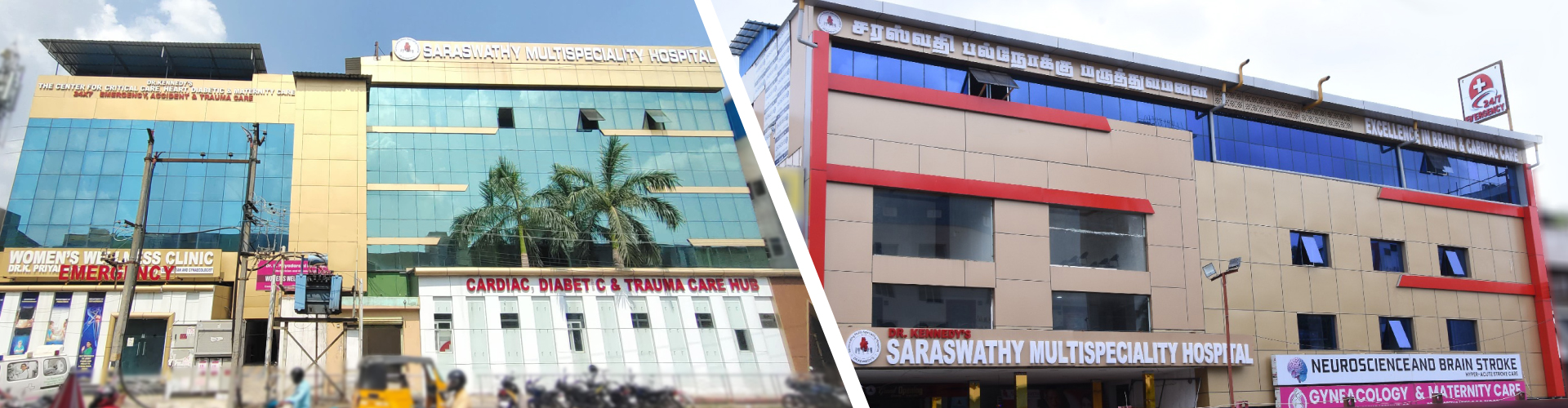
Expert Spine Care at Dr. Kennedy's Saraswathy Multispeciality Hospital
If back pain, neck pain or a suspected slip disc has been affecting your daily life, our orthopaedic and spine care team can help you find out why and what to do about it.
Location: Madipakkam / Medavakkam Main Road / Tambaram
Call: 044-2224 2525 / 99404 99142